
From the start, The Lindsey has been guided by the principle that Harrisonburg’s growth should reflect community input, align with the City’s Downtown 2040 Plan, and breathe new life into the heart of the city.
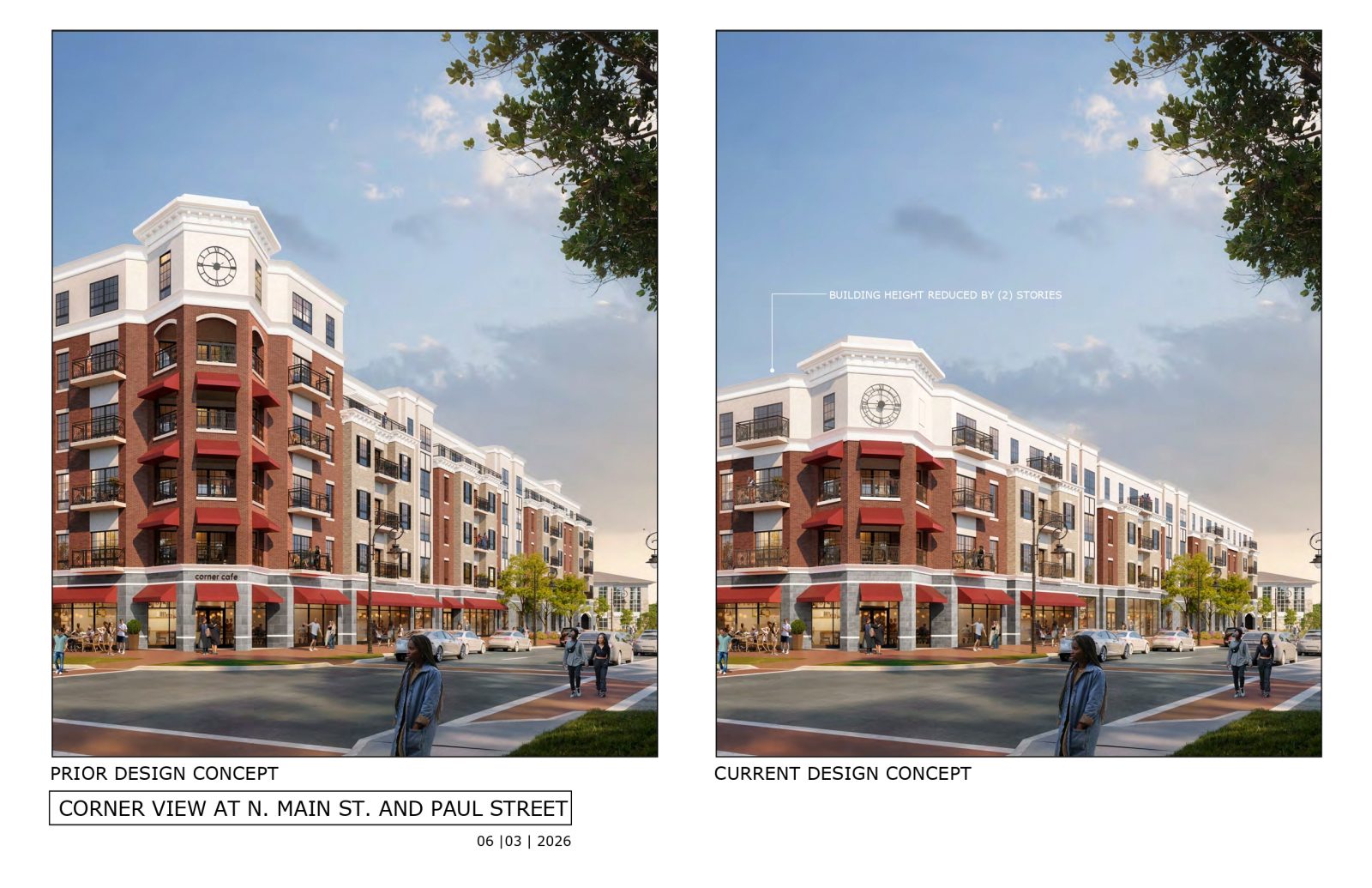
Over the past several months, we’ve participated in public meetings, small group discussions via our unbiased facilitation process, and ongoing conversations with neighbors, business owners, and city leaders. We’ve heard concerns regarding the size and scale of the project from the community. In direct response to that feedback, we’ve revised our project from six stories to four. This meaningful concession maintains the core purpose of expanding housing supply and supporting downtown vitality while incorporating community feedback.
Here’s what we’ve changed in response to community feedback:
- HUGE CHANGE – reduced height to a 4-story building, the same height as City Hall down the street.
- The building’s total height will be 52 feet, closer to nearby townhomes (35 feet) than the maximum height allowed by zoning (75 feet).
- “City Planning Staff RECOMMENDS REZONING (3rd time) – with new section evaluating the new JMU Master Plan, report states “staff believes the subject site is among the more appropriate locations in the City for student-oriented housing. Its proximity to campus and downtown supports walkability and may help reduce reliance on personal vehicles compared to student housing located further away and in less accessible areas.”
- $70,000 committed to Harrisonburg’s Affordable Housing Fund: based on a detailed report conducted by “Virginia Proffer Solutions”, we’ve committed to the maximum allowed under City guidelines.
- Project materially scaled down to a maximum of 180 residential units and 440 bedrooms.
- Kept apartment balanced unit mix with at least 71 studios and one-bedroom apartments and no more than 85 four-bedroom units.
- Materially reduced scale & visual impact by removing the fifth and sixth floors entirely.
- Retained prior change to architectural design which is commonly appealing as a better fit in with the look/feel of Harrisonburg, and designed the clocktower element as the welcoming corner into downtown.
- Reduced parking structure height and total spaces to 320.
- Retained retail corner storefront along Main St, up to 5,000 sqft
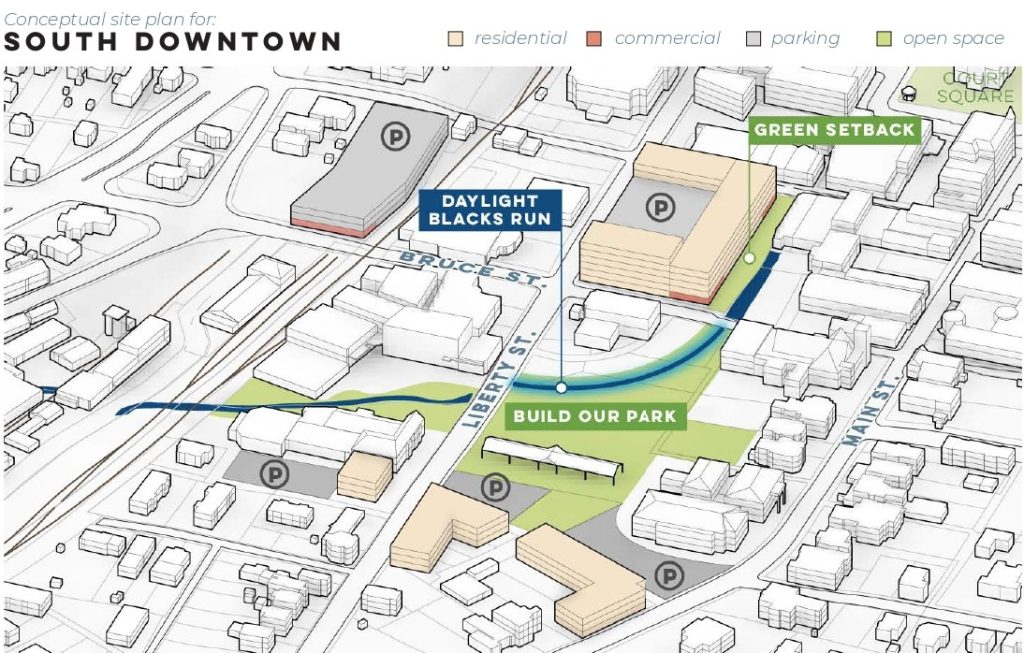
- Retained integration with ‘Build our Park’ initiative, giving easement from our site into the park.
An Economic Boost for Harrisonburg
We’re turning 473 S Main St into an engine for downtown’s growth, longevity and prosperity.
The Lindsey infuses as much as $75M in private investment and $470,000+ per year in taxes into Harrisonburg. This new revenue funds critical city needs and services.
With up to 180 units and 5,000 square feet of retail space, The Lindsey will bring 350 new customers to our existing small businesses and provide an opportunity for more commerce downtown.
That’s why so many local businesses have voiced support for this project.
The Lindsey at a Glance
More Affordability
- Up to 180 total apartments
- $70,000 contribution to local affordable housing, the highest amount allowed under city rules.
- A minimum of 71 studios and one-bedrooms
- Limited to 85 four-bedroom apartments
- Boost in local supply
- At 2.1%, Harrisonburg has Virginia’s lowest rental vacancy rate
New Opportunities
- Corner retail storefront along Main St
- Doubling commercial space up to 5,000 sqft from 2,000 sqft
- Exterior seating
- Enhanced pedestrian access
Easier Parking
- 320 parking spaces
- 10 EV chargers
- 106 total bike spaces
Better Connectivity
- $75k invested in the ‘Build our Park’ initiative
- Adjacent to the Liberty St bike lanes/cycle track
- Paul Street Extension alleviates traffic issues on Grattan Street Crossover
- Eliminates commercial dead zone on Main Street
Harrisonburg’s 2040 plan lays out the need for more housing in our city, particularly in and around downtown.
The Lindsey, the first major apartment project in Harrisonburg in 16 years, will address our region’s housing shortage and bring new residents closer to our city’s small businesses.
This site is within walking distance of both downtown and JMU, reducing the need for car trips. This reduces traffic impacts and improves our city’s sustainability.
The Lindsey will have 106+ secured bike parking spaces and 10 EV charging spaces to further enhance our commitment to Harrisonburg’s sustainability goals.
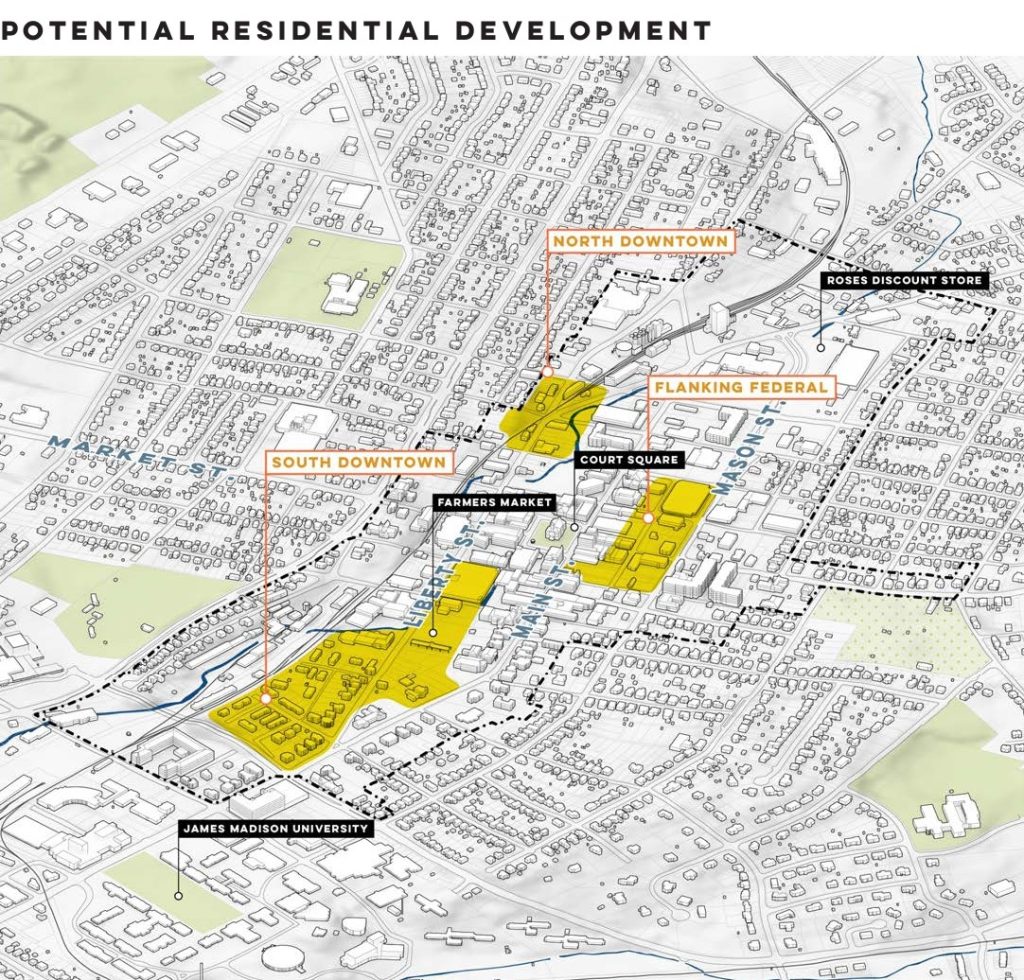
Harrisonburg can meet our shared goals of more housing supply, supporting local businesses, increasing walkability and growing our economy by delivering on the 2040 Plan.
The Lindsey will build on the success of developments like Urban Exchange to create more vibrancy downtown and spur growth and investment in our city. The Lindsey also supports the expansion of local parkland and provides funding for the Paul Street extension to improve traffic circulation.
It’s time to start work on the 2040 Plan. It’s time to build.
Explore Our New Design
We want to hear from you!
Share your feedback, voice your support or suggestions
Links & Resources
Frequently Asked Questions
The Lindsey is the reimagined product of over 2 years of work, resulting again in substantial change during the course of our conversations with neighbors and the community. We’ve revised the architecture from modern to traditional, better matching the downtown, increased the number of vehicle and bike parking spaces, reduced the number of 4-bedroom units and increased studios/1-bedrooms apts, expanded the size of the corner retail space and added additional screening of the parking structure.
We’re continuing to meaningfully listen to Harrisonburg residents as we work to deliver this critical project.
Yes! We commissioned a verified study that shows The Lindsey will generate at least $470,000+ per year in taxes, with an additional $600,000 generated over the 24-month construction period. This will reduce pressure for the city to raise taxes from other sources, including existing homeowners and businesses.
Our latest traffic study shows that The Lindsey’s impact on traffic will be minimal, even less so with the reduction to 440 residents. Within easy walking and biking distance to both downtown and JMU, and with ample bike parking, daily car trips are reduced.
Harrisonburg hasn’t seen a new multifamily building downtown in over 16 years. This has forced development into the county, causing taxes to rise in the city and exacerbating traffic congestion. The Lindsey will add 265 modern homes where people want to live, near jobs, JMU and downtown shops. This helps relieve housing pressure on older neighborhoods and prevents more traffic-inducing sprawl.
The Lindsey is not a dorm. It’s a professionally managed, mixed-use apartment community with a diverse mix of units. At least 40% of residences will be studios or one-bedrooms—housing types that JMU doesn’t provide—making it attractive to young professionals and downtown workers, in addition to graduate and undergraduate students. This layout is atypical of student housing, which typically has a large majority of 4- and 5-bedroom apartments.
The Lindsey will be professionally managed with 24/7 on-site staff and cater to residents who want a peaceful, rewarding living environment, not a party pad.
Breathing new life into downtown is essential to supporting Harrisonburg’s small businesses. With hundreds of new residents living two blocks from Main Street, shops, restaurants and services will see a significant boost in foot traffic. Dozens of local businesses and residents have already signed petitions supporting the project and have uniformly agreed that this project is essential for the healthy future of downtown.
The Lindsey will help draw and anchor a young professional population that values urbanism and walkability.
The housing market is like a game of musical chairs. Just substitute homes for chairs. If you add more people without increasing the number of seats, some people won’t be able to sit. In real life, this pushes the cost for housing up as a housing shortage allows wealthier residents to price out working-class families.
By adding new supply to the market, The Lindsey will prevent older, existing housing options from becoming unaffordable. Without projects like these, people don’t go away; they just push other people out of the finite number of homes.
Harrisonburg currently has a ‘shadow market’ of single-family homes that are rented as group homes. By adding more apartments, we also reduce the number of renters competing for existing homes, increasing opportunities for families to buy or rent their own house.
No, our report was conducted according to rigorous state and local standards, capturing traffic data while JMU was in session. Our methodology was thoroughly vetted and approved by city officials to ensure regulatory compliance.
Not at all, and this possibility has been thoroughly considered and tested. Our study showed that utilizing the existing MLK Jr Way route would be faster than the Paul St route, even during rush hour. Existing traffic calming measures on Paul St will remain effective in deterring significant use by non-local traffic.
Our study found that The Lindsey will have a very limited impact on surrounding roads. This is largely due to the building’s central location, which is easily accessible by several different roadways, dispersing traffic from impacting any one corridor. Research also shows that mid-rise apartment buildings generate much less traffic per unit than other, less dense options. When combined with The Lindsey’s excellent walkability and bikeability, our study concluded that there would be no major traffic impacts.
Helpful Files & Documents
Thank you for taking part in our project. Please click below file(s) to download and save on your device.